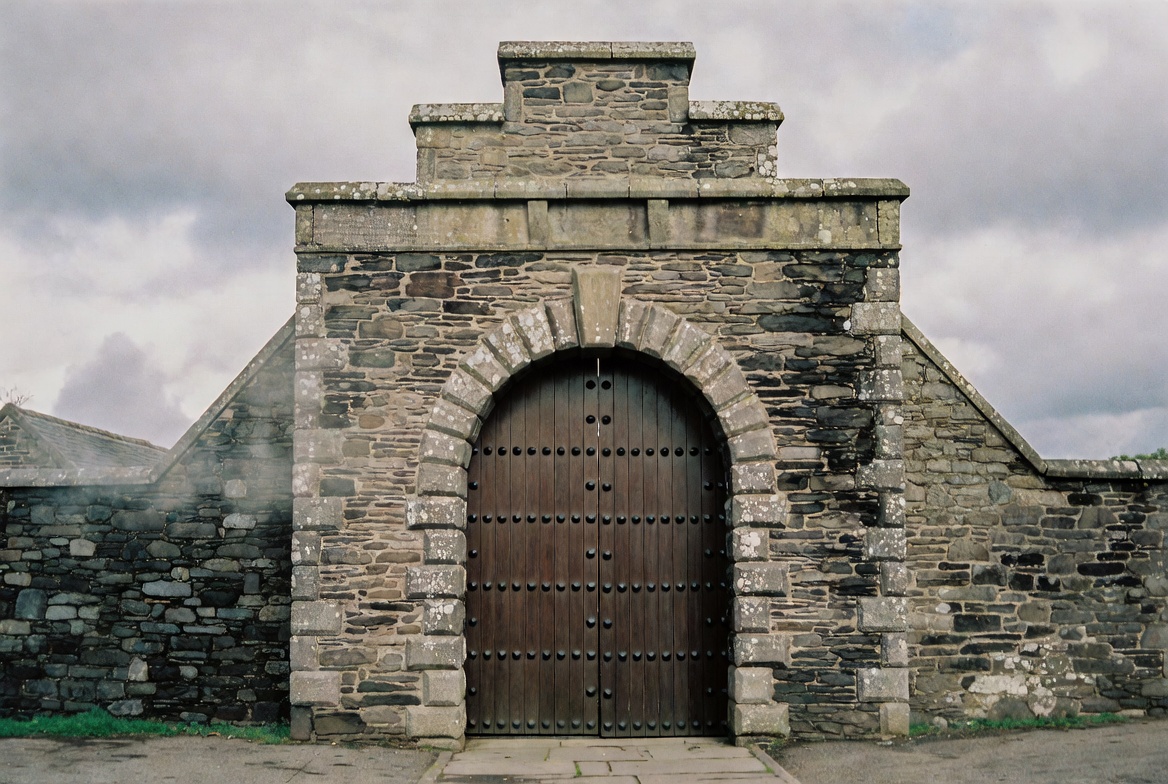
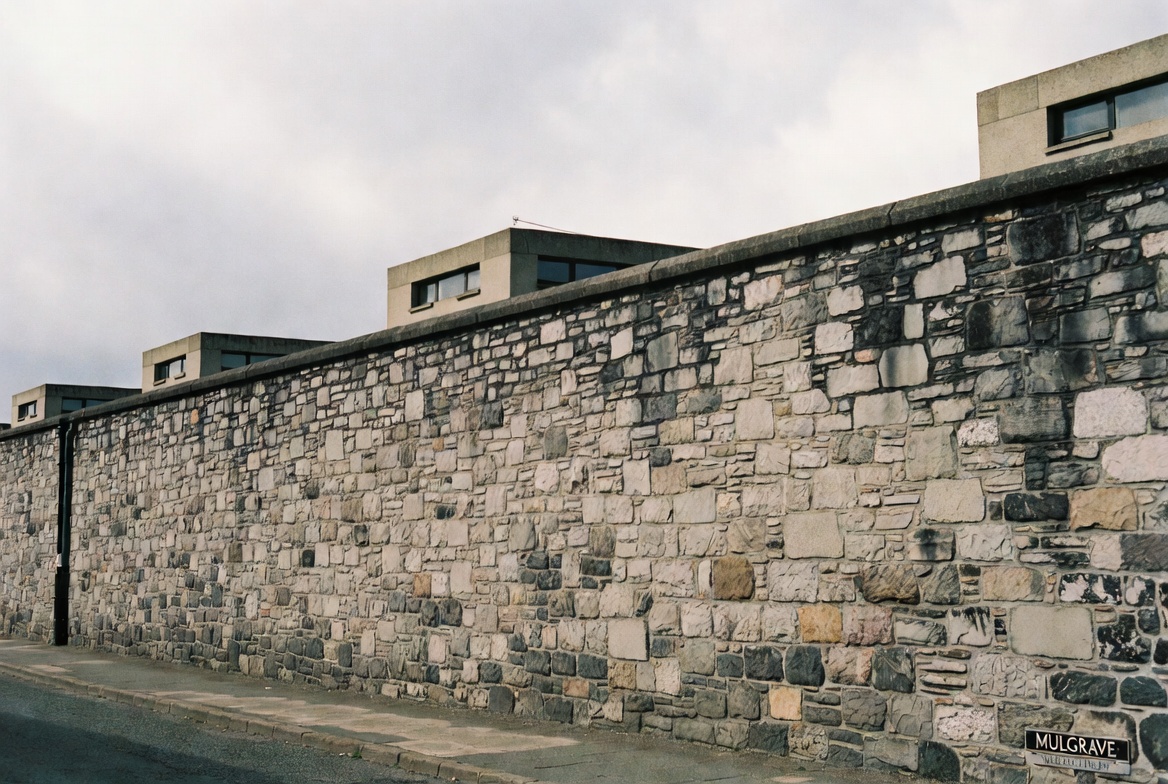
Limerick Prison occupies a low rise on Mulgrave Street, half a kilometre east of King John's Castle. Its limestone perimeter wall has stood unbroken since 1821; almost everything inside that wall has been pulled down and replaced once, sometimes twice. Yet it is still, for that boundary alone, one of the oldest continuously operating prisons in the Republic of Ireland.
A county gaol of 1821
Construction of the new county gaol began in 1815 to replace an older, dilapidated city gaol on the Crescent. The new building opened in 1821. It followed the standard county-gaol pattern of its period — a square central yard ringed by ranges of cell blocks, with separate accommodation for men, women, and debtors. Rough limestone, quarried locally, made up the wall and the cell blocks; the roofs were of imported Welsh slate.
The prison passed through every nineteenth-century reform fashion: the silent system of the 1830s, the separate system of the 1850s, the progressive labour system of the 1880s. Whippings, treadmills, and oakum-picking are documented in successive grand-jury reports. The chaplain's logs from the 1860s and 1870s are preserved in the Limerick city archive and make remarkable reading.
The twentieth century
Limerick housed Anti-Treaty republicans during the Civil War and continued in routine use as a county prison through the lean years of the 1930s and 1940s. By the 1990s its physical fabric had aged badly. From 1994 a long programme of demolition and rebuilding began. Most of the original cell blocks were knocked down and replaced by modern, double-glazed wings. By 2018 the female unit had been fully replaced by a purpose-built wing on the eastern side of the site; the original female section is now used only when male overflow demands it.
Conditions and reform
Inspectorate reports through the 2010s repeatedly criticised aspects of the prison — particularly the older male cell blocks, where reports in 2012 described areas as "dirty, unhygienic, and severely overcrowded." A new male block opened in 2023 to relieve those conditions, and the former Victorian wings are gradually being decommissioned.
Limerick has never been a museum or open to public visit. The prison's own published history, available on its website, is succinct on the matter: it has been working, more or less continuously, since 1821, and it intends to keep working.
Notable inmates
- Anti-Treaty republicansHeld in numbers during the Civil War, 1922–23
- Frank AikenBriefly held in 1923 during the IRA's final offensive
- Recent figuresThe prison's current population is not published in detail