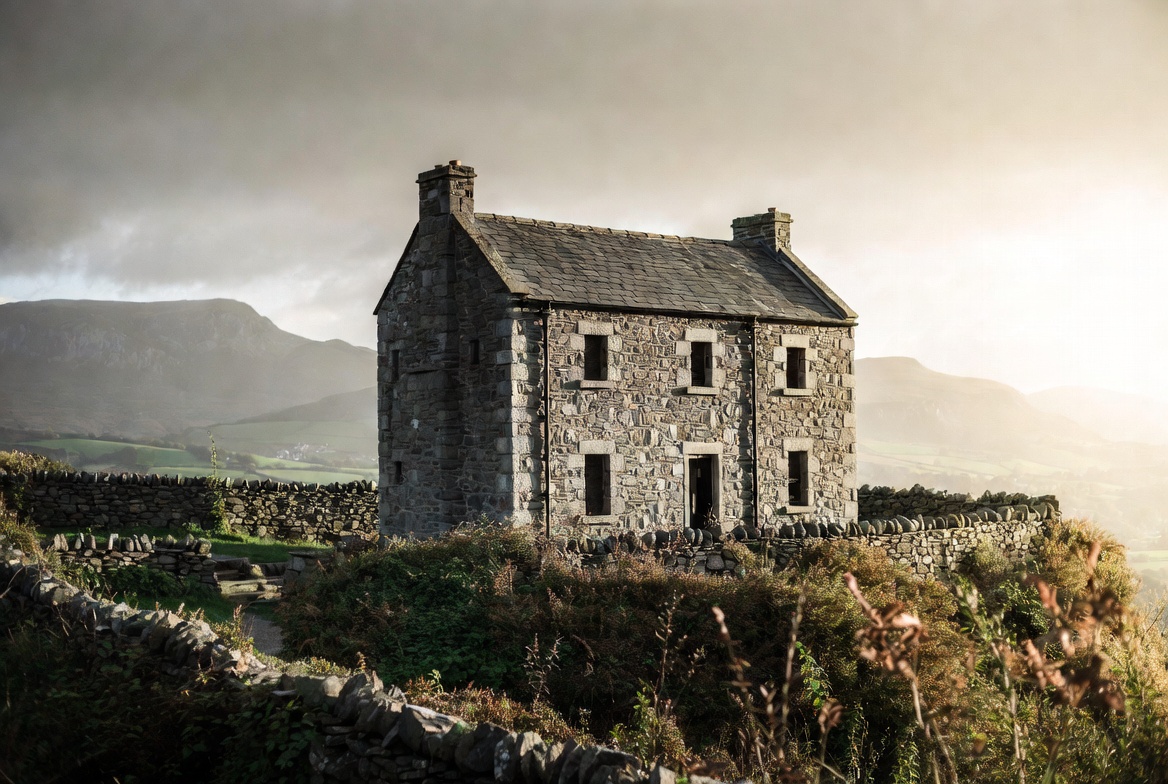
Wicklow Town's gaol stood on the open height of Kilmantin Hill, looking down to the harbour and out to the Irish Sea. It was here that men condemned to penal transportation were marched in chains to wait for the convict ships, and from here that thousands of them never returned.
From Queen Anne to Vitruvian extension
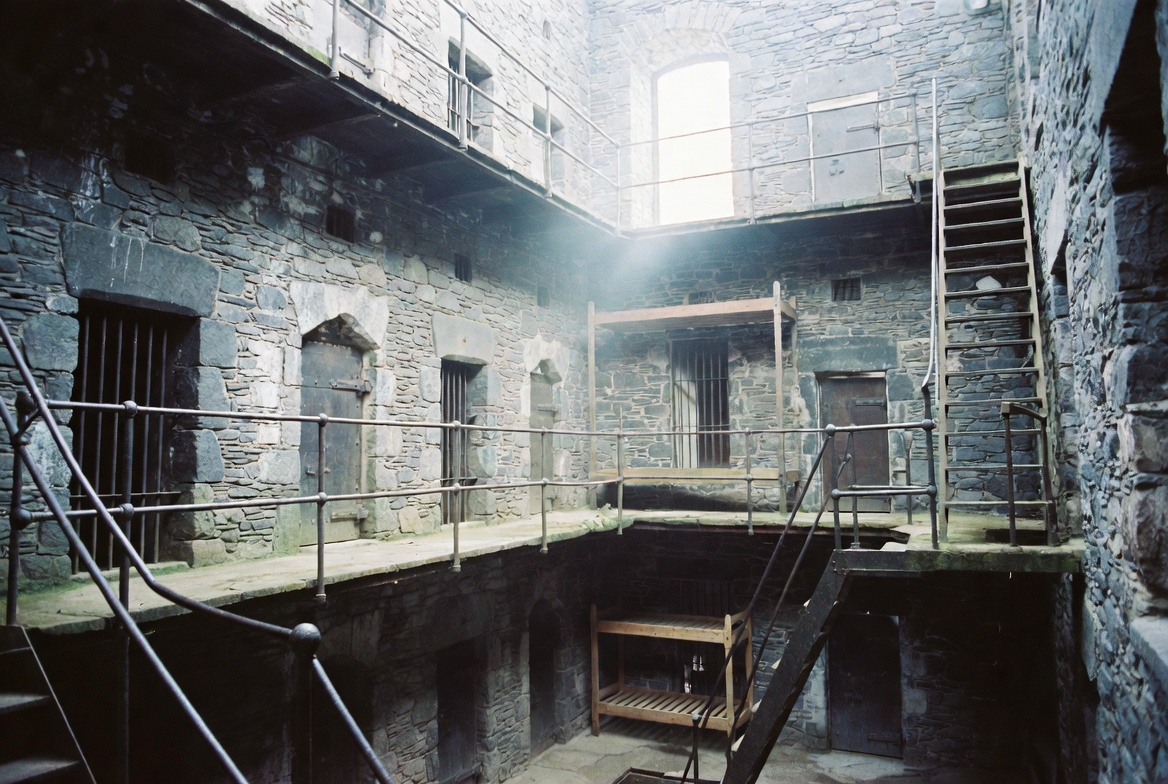
Construction began in 1702, in the second year of Queen Anne's reign — making Wicklow one of the oldest surviving gaols in Ireland. The original three-storey block of cut granite is still the building's spine. A substantial extension was added in 1822 to designs by William Vitruvius Morrison, the leading Irish architect of his generation, and a further block followed in 1842–43. The cell windows were small and high; the walls almost a metre thick; the staircase, by tradition, the steepest in any Irish public building.
The 1798 prisoners
Wicklow was deeply touched by the 1798 Rebellion. Many of the United Irishmen taken in the surrounding mountains were brought here to await trial or transportation. Whippings, brandings, and the use of the picket — a wooden stake on which prisoners were forced to balance on bare feet — are recorded in the parliamentary papers of the period. Of the rebels who survived their detention, large numbers were transported to New South Wales aboard the convict ships of the early 1800s; some founded Irish settlements in Australia that still bear Wicklow place-names.
Famine, transportation, and decline
The famine of 1845–49 brought the gaol's busiest years. Records show inmates as young as eight committed for the theft of a turnip; mothers committed alongside their infants; whole families convicted of bread theft and shipped together to Australia. Punishments were harsh — sleeping on stone, water rations, the cat-o'-nine-tails — but at least the inmates were given food. Outside the walls, hundreds of thousands were not. The gaol's books from the period read like an inventory of survival.
Transportation ended in 1853 and the prison's role contracted. By 1877 it had been downgraded to a bridewell for petty offenders; it closed effectively in 1900. It was reopened in 1918 to hold republican prisoners during the War of Independence and Civil War — among them Erskine Childers, who was held briefly here before his execution in 1922 — and finally emptied of inmates in 1924.
Demolition, rumour, restoration
The gaol was partly demolished in 1954 and stood as a half-ruin for decades. Local stories of haunting accumulated: figures seen on the upper floors, footsteps on the iron stair, the smell of pipe smoke in the cells. The building was restored from 1995 and opened as a museum in 1998. It featured on a 2009 episode of Ghost Hunters International and is regularly described in Irish guidebooks as one of the most haunted public buildings in Europe — a claim its current curators neither make nor entirely contest.
Notable inmates
- 1798 United IrishmenMany tried, whipped, transported from this gaol
- Famine-era convictsChildren committed for petty theft of food
- Erskine ChildersHeld briefly 1922 before transfer and execution
- Billy Byrne of Ballymanus1798 leader; imprisoned and executed in Wicklow town