Cork's old county gaol stood on Gaol Walk, beside the courthouse on the city's south bank. By the 1810s it was unfit. The new gaol was built across the river on a site that gave it commanding views, defensible walls, and — for the architect — a pretext for full-blown Gothic theatre.
Castle on Sunday's Well
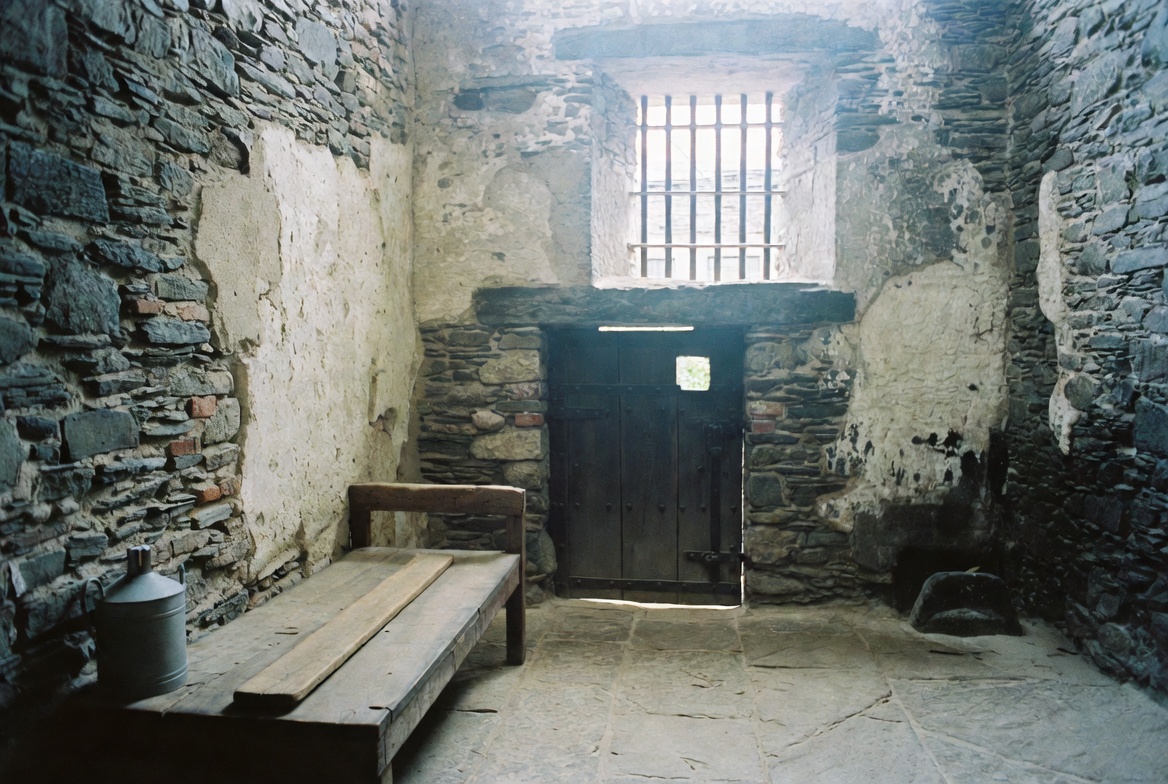
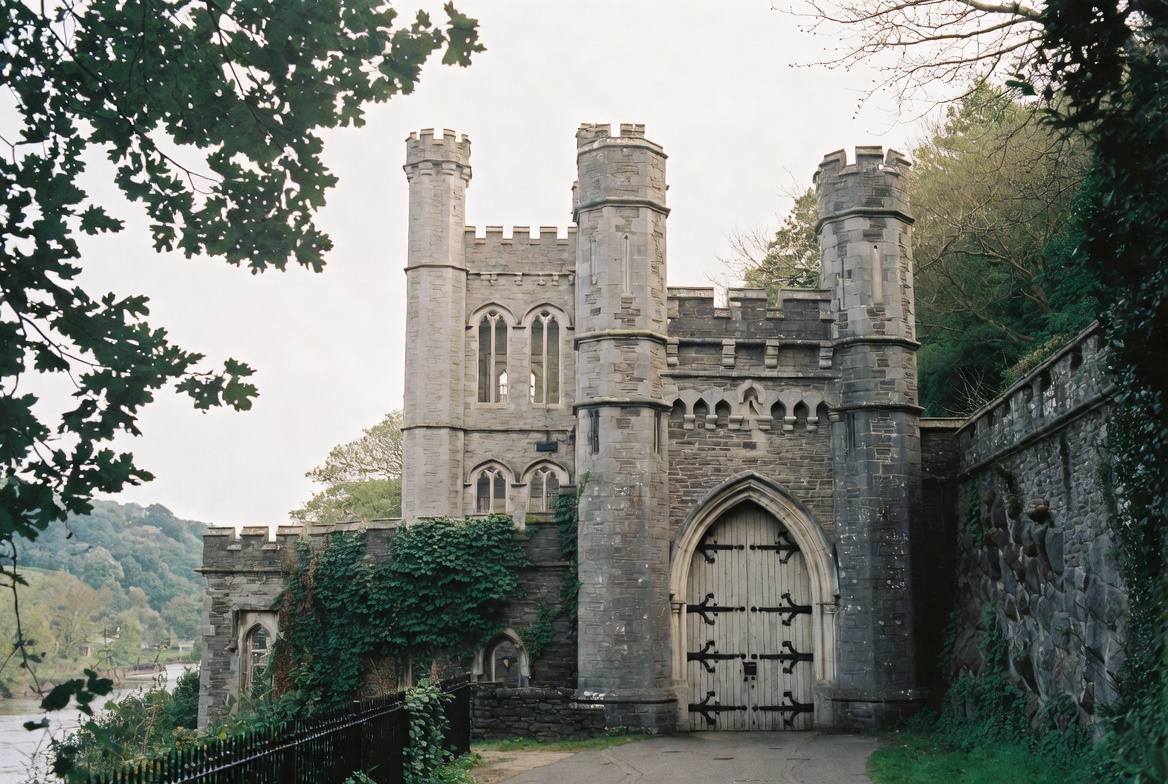
William Robertson of Kilkenny won the commission. He produced a castellated façade of cut limestone, with octagonal corner towers, machicolated parapets, and a central gatehouse modelled on a medieval keep. The interior was less romantic: a tight quadrangle of cell ranges, an exercise yard fanning from a central inspection point, separate accommodation for women and debtors, and a chapel above the entrance. On opening in 1824, contemporary press declared it "the finest prison in the three kingdoms."
It was originally the city gaol, distinct from the county gaol that stood opposite the courthouse. From 1878 it took both populations. The combined population was always small — Cork City Gaol never held more than a few hundred prisoners — but its symbolic weight far exceeded its capacity.
Fenians, suffragists, and Republicans
Brian Dillon, the Cork Fenian organiser, was held here in 1865 and died, broken in health, only six years after release. The suffragist and revolutionary Constance Markievicz was confined here briefly in 1919 after winning a seat in the British Parliament — the first woman to do so. The young Frank O'Connor, soon to become one of Ireland's finest short-story writers, was imprisoned in 1923 for his Anti-Treaty activities; the experience runs through his work for the rest of his life.
From radio station to museum
The gaol closed as a working prison in August 1923 and stood empty for several years. In 1927 Ireland's first official radio station, 6CK, began broadcasting from a transmitter housed in the Governor's residence — making the building's last industrial purpose the dissemination of news rather than the silencing of prisoners. The station moved out in the 1950s. The site fell into long neglect and was eventually restored as a museum, opened to the public in 1993.
Today the gaol is one of Cork's most visited heritage sites. Audio guides take visitors through reconstructed Victorian cells, the radio museum in the Governor's house, and the still-imposing gatehouse where prisoners were processed on arrival.
Notable inmates
- Brian DillonFenian organiser, sentenced 1865
- Constance MarkieviczHeld briefly 1919 — first woman elected to Westminster
- Frank O'ConnorHeld 1923; later wrote of the experience repeatedly
- Thomas DavisYoung Ireland writer; brief detention
- Forty-two unnamed republicansEscaped en masse, 11 November 1923