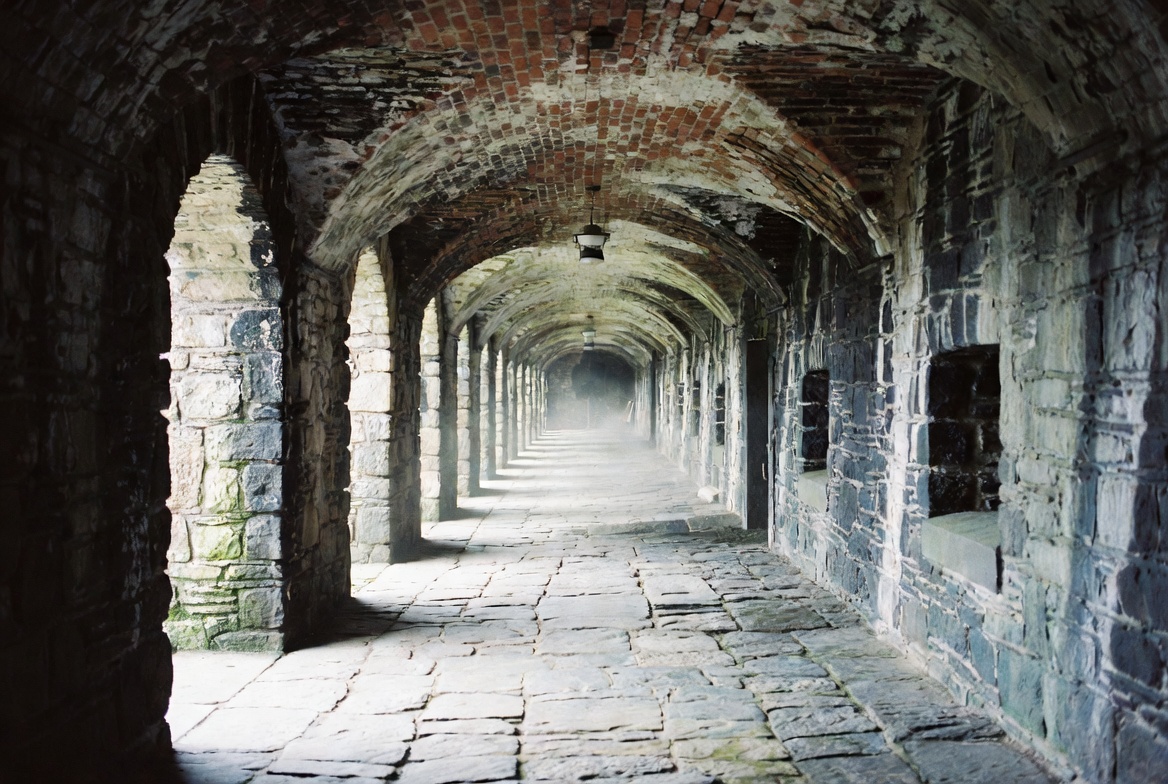
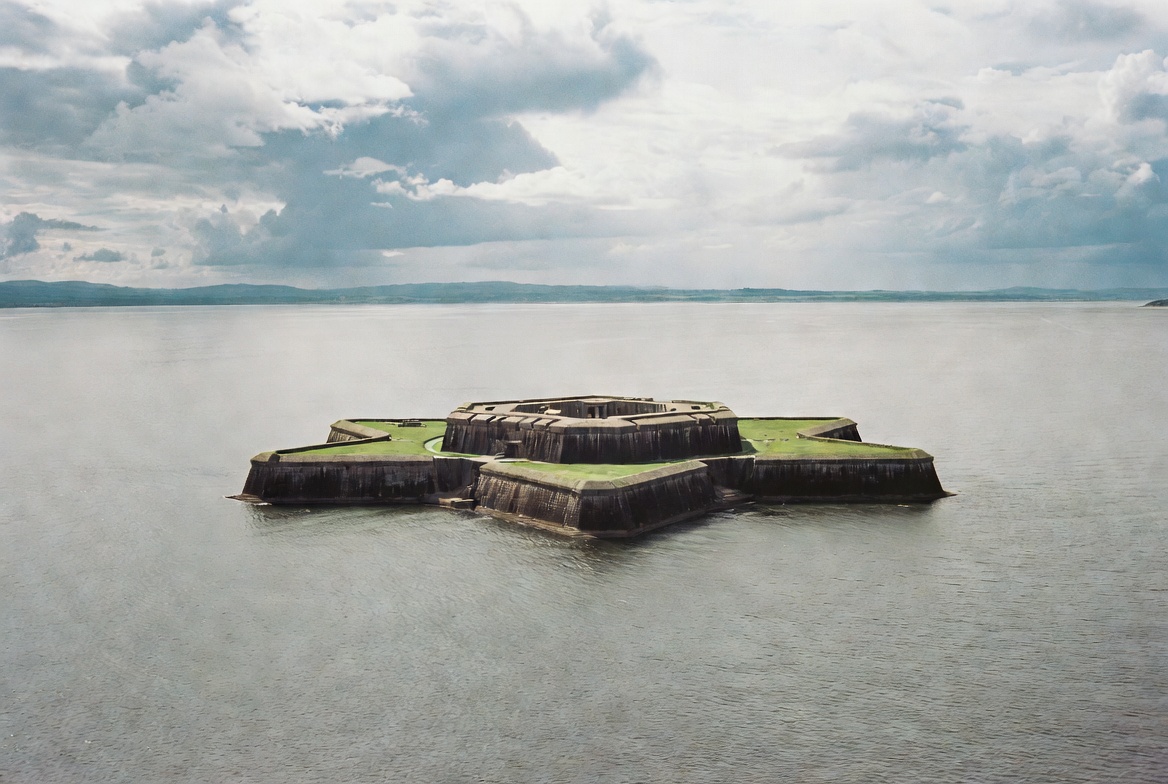
Spike Island sits in the inner basin of Cork Harbour, a flat, half-square-mile of grass and limestone reached today by a short ferry from Cobh. For two centuries it has been one of the most heavily fortified pieces of land in Ireland — and, for parts of those two centuries, the most densely populated.
Star fort to convict depot
Construction of Fort Westmoreland — the great six-bastion star fort that occupies the centre of the island — began in 1804 to designs by Charles Holloway. It was meant to defend Cork Harbour against a Napoleonic invasion that never came. The fort was technically complete in 1850, by which time its purpose had already shifted dramatically.
In 1847, in the depths of the Great Famine, the British government converted the fort into a convict depot for men sentenced to penal transportation. Theft convictions across Ireland had risen — many out of desperation — and the existing prisons were overwhelmed. Within a few years Spike was holding 1,400 convicts, then 2,000, then over 2,300 — possibly more than any other single prison in the British Empire. Conditions were dire: typhus, dysentery, and starvation killed in numbers, and a small graveyard at the eastern end of the island still records the famine dead.
Transportation and after
Many of those held on Spike sailed onward to Bermuda, Gibraltar, or Australia. The depot served, in effect, as the Atlantic clearing-house for Irish convicts during the great age of transportation. When transportation to Australia ended in 1853, the prison's role contracted. By 1883 it had closed as a convict depot and reverted to military use.
It returned to penal use during the War of Independence. In 1921 over 1,400 republican prisoners were detained on the island under the same overcrowded conditions, until the Anglo-Irish Treaty in December that year freed most of them.
From handover to heritage
Spike Island was handed over to the Irish state in July 1938 as part of the return of the Treaty Ports. Renamed Fort Mitchel after the patriot John Mitchel — himself once held in convict transit through the harbour — it served alternately as a military post and a juvenile prison until its final closure as a place of detention in 2004.
Cork County Council then began a long restoration. The prison-museum opened to the public in 2016 and won "Europe's Leading Tourist Attraction" at the World Travel Awards in 2017. Visitors today take the ferry from Kennedy Pier in Cobh; the tour passes the bastions, the graveyard, the surviving cell blocks, and the Burnt Block.
Notable inmates
- John MitchelYoung Ireland leader; transferred through Spike on the way to Bermuda, 1848
- Famine-era convictsMany thousands, often committed for petty theft of food
- 1,400+ republican interneesHeld during the War of Independence, 1921
- Martin Cahill ("The General")Confined briefly here as a juvenile